How to Measure Shirt Sleeve Length: Step-by-Step Guide
A good fit is an important part of dressing well, especially for men wearing shirts with dress pants or chinos. While many people focus on collar and chest measurements, sleeve length is often overlooked and can make a big difference in both comfort and appearance.
Wearing sleeves that are too short or too long can affect the overall fit of a shirt, even when the size seems correct. Since shirt sizing varies between brands and styles, knowing how to measure your sleeve length accurately helps you choose shirts that fit better and look more polished.
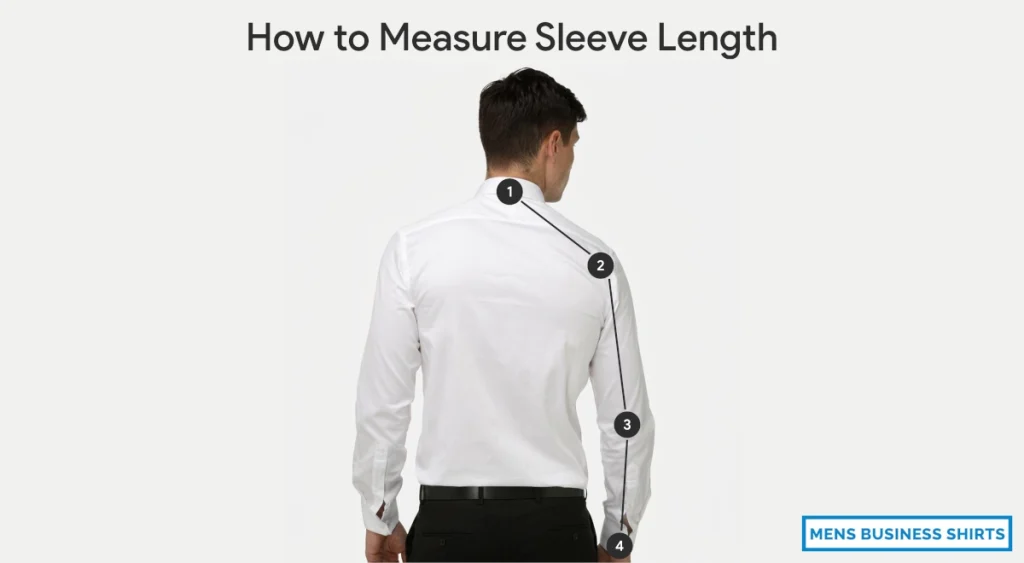
In this guide, you will learn the steps to measure your sleeve length correctly, along with a guide to help you buy the right sleeve length shirts.
What You Need Before Measuring
Before you start measuring your sleeve length, make sure you have the right tools available. You only need a few simple items to get an accurate measurement:
- Flexible Measuring Tape: A flexible tape measure is essential because it can follow the natural shape of your shoulder and arm. A rigid ruler may not provide an accurate measurement.
- Mirror or Someone to Help: Using a mirror or asking someone for help can make the process easier, especially when measuring the back of your neck and shoulder area.
- A Well-Fitting Shirt (optional): If you already have a shirt with sleeves that fit well, you can use it as a reference to understand your preferred sleeve length.
How to Measure Sleeve Length
To get an accurate sleeve length measurement, it is important to use the correct starting points and keep your arm in a natural position. Stand upright with your arms relaxed at your sides, then follow these steps:
Step 1: Get Your Centre-Back-to-Shoulder Measurement
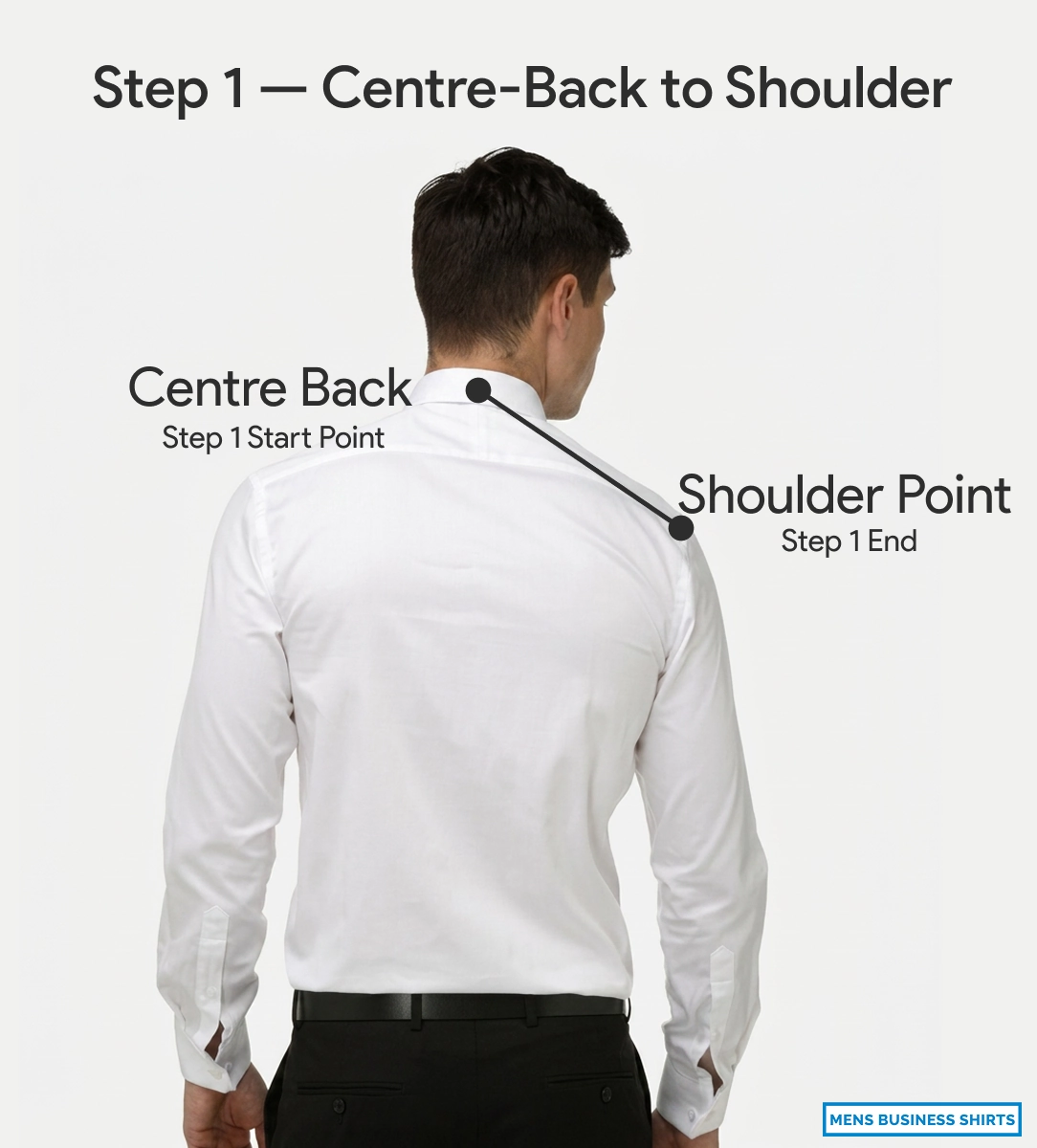
Measure from the centre back of your neck to the shoulder point.
- Locate the centre back of your neck, where your spine meets the base of your neck.
- Place the end of the measuring tape at this point.
- Measure across the top of your shoulder to the point where your shoulder meets your arm (shoulder point), following the natural curve of your shoulder.
- Note this number; this is your centre-back-to-shoulder measurement.
Step 2: Get Your Shoulder-to-Elbow Measurement
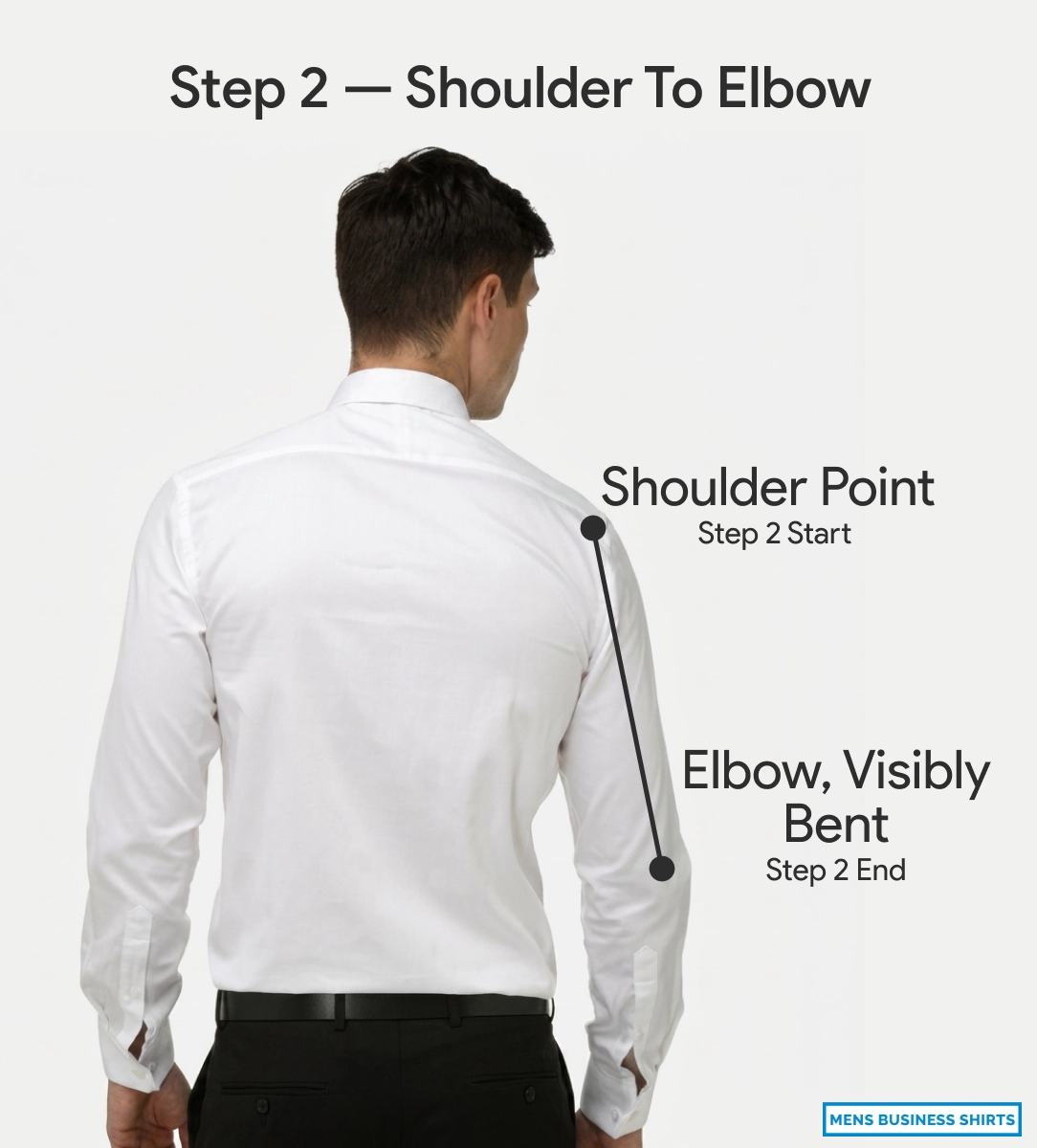
Measure from the shoulder point down to your elbow.
- Place the end of the measuring tape at the shoulder point where your first measurement ended.
- Measure down the outside of your arm to your elbow, keeping your arm slightly bent to follow its natural position.
- Note this number; this is your shoulder-to-elbow measurement.
Step 3: Get Your Elbow-to-Wrist Measurement
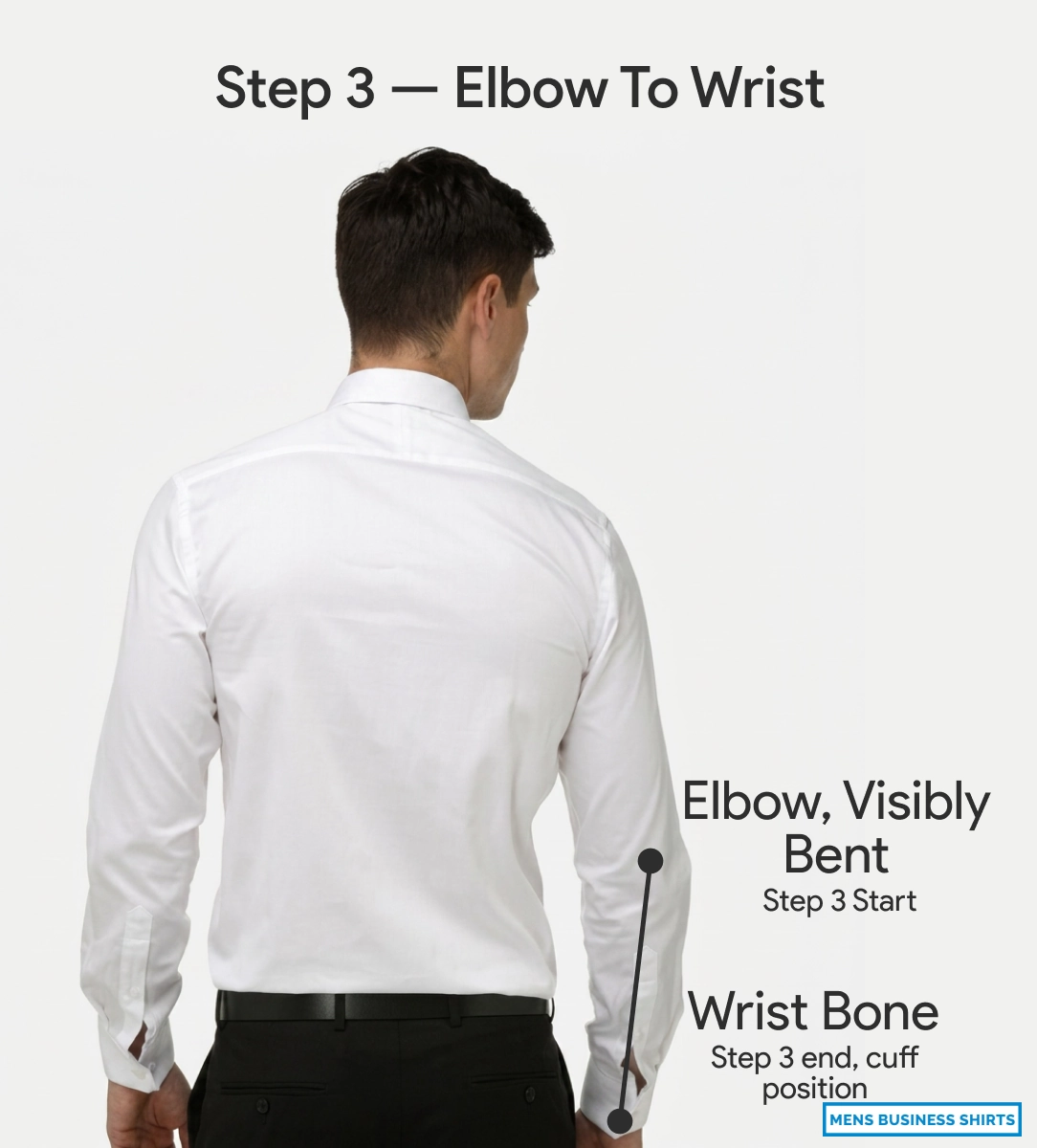
Measure from your elbow to where you want your shirt cuff to sit.
- Place the end of the measuring tape at your elbow.
- Measure down towards your wrist, keeping your arm slightly bent and the tape relaxed against your arm.
- Note this number; this is your elbow-to-wrist measurement.
Step 4: Calculate Your Total Sleeve Length
Add your three measurements together to get your total sleeve length.
- Add your centre-back-to-shoulder, shoulder-to-elbow, and elbow-to-wrist measurements together.
- That total is your sleeve length. Use it when checking shirt size charts or comparing different brands.
Step 5: Check Your Measurement
Once you have your number, confirm it’s right before you buy.
- Put on a well-fitting shirt (or hold your reference shirt against your arm) and bend your elbow to 90°, like you’re checking a watch.
- Your cuff should stay at your wrist bone; it shouldn’t ride up toward your elbow or slide down past your hand. If it moves noticeably, re-measure from Step 1.
What’s the Average Sleeve Length? Quick Reference by Height
Not sure what number to expect? Use this as a starting point, then confirm with your own measurement; arm length can vary by 2 inches or more between two people of the same height.
| Height | Sleeve Length (in) | Sleeve Length (cm) |
|---|---|---|
| 5’6″ | 32″–33″ | 81–84 cm |
| 5’8″ | 33″–34″ | 84–86 cm |
| 5’10” | 34″–35″ | 86–89 cm |
| 6’0″ | 35″–36″ | 89–91 cm |
| 6’2″ | 36″–37″ | 91–94 cm |
| 6’4″ | 37″–38″ | 94–97 cm |
These ranges are a guide, not a guarantee — always confirm with your own measurement and check the brand’s specific size chart before buying.
Common Sleeve Measurement Mistakes
Even a small mistake during measurement can affect how your shirt sleeves fit. Avoid these common errors to get a more accurate sleeve length:
- Keeping your Arm Completely Straight: When your arm is fully straight, the measurement may not account for your natural arm position. Keep your elbow slightly bent to allow enough room for comfortable movement.
- Starting from the Wrong Shoulder Point: The measurement should begin from the correct shoulder point where your arm starts. Measuring from the edge of your shoulder or another position can result in an inaccurate sleeve length.
- Measuring to the Wrong Wrist Position: The tape should end where you want your shirt cuff to sit, usually around the wrist bone. Measuring too high or too low can affect the final sleeve length.
- Pulling the Measuring Tape too Tightly or Loosely: Keep the tape relaxed against your body without stretching or leaving extra space. A tape that is too tight or loose can change the final measurement.
Is Sleeve Length the Same as Arm Length?
No. Sleeve length and arm length are related, but they are measured differently.
Arm length usually refers to the distance from your shoulder to your wrist, while shirt sleeve length is measured from the centre back of your neck, across your shoulder, and down to your wrist.
This distinction matters when buying shirts because sleeve length is not based only on the length of your arm. Your shoulder width and the construction of the shirt can also affect the final measurement.
How to Buy Correct Sleeve Length Shirts
Now that you know your sleeve length, the next step is finding a shirt that matches it. Instead of settling for a standard sleeve length that may be too short or too long, look for shirts with multiple sleeve length options.
At Mens Business Shirts, you can choose from shirts with different sleeve lengths, making it easier to find a fit that matches your measurements. This gives you a better starting point for comfortable sleeves and a more polished look.
Find your fit with our multiple sleeve length shirts.
FAQs
How do I measure sleeve length correctly?
To measure sleeve length correctly, start from the centre back of your neck, measure across your shoulder, and continue down your arm to your wrist or cuff position. Add the measurements together to find your total sleeve length.
Can I measure sleeve length myself?
Yes, you can measure your sleeve length yourself using a flexible measuring tape and a mirror. However, having someone help you can make it easier to measure the back of your neck and shoulder area accurately.
How do I know what sleeve length I need?
The best way to find your ideal sleeve length is to measure your arm and compare the result with the brand’s size chart, as sizing can vary between brands.
What does 32/33 sleeve length mean?
A 32/33 sleeve length means the shirt is designed with a sleeve length between 32 and 33 inches. This measurement helps customers choose shirts based on their arm length and body proportions.
Where should a shirt cuff end?
A shirt cuff should typically end around your wrist bone, allowing it to show slightly beyond a jacket sleeve. The exact fit can vary depending on your proportions and personal preference.
How long is a standard sleeve?
There is no single standard sleeve length because it depends on your body measurements, shirt style, and brand sizing. The best way to find the right fit is to measure your sleeve length and compare it with the brand’s size chart.
What happens if my shirt sleeves are too long or too short?
Sleeves that are too short can restrict movement and look uncomfortable, while sleeves that are too long can affect the overall fit and appearance of the shirt.
