Tuxedo vs Suit: What’s the Difference?
Most of us have a good understanding of suits, but not of tuxedos. A clear understanding of both and their differences can help you buy and wear occasion-appropriate attire.
A tuxedo delivers the highest level of formality for men on black-tie nights, such as galas, award shows, or high-end weddings.
A suit is also formal attire where the jacket and trousers are made from the same material, which is ideal for business meetings, formal work events, and office wear.

The main differences lie in satin details, jacket style, fabric, and pairings.
Here at Mens Business Shirts, we not only sell mens formal attire but also share educational materials. Below, we have covered tuxedos vs. suits in detail in simple terms.
Table of contents:
- What is a Tuxedo?
- What is a Suit?
- Tuxedo vs Suit Differences
- When to Wear a Tuxedo or Suit?
- Accessories for a tuxedo and a suit
- Tuxedo vs. Suit: Styling Tips
- Tuxedo vs. Suit: Buying vs Renting
- Dressing Mistakes
- History
- FAQs
What is a Tuxedo?
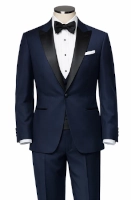
A tuxedo is a very formal type of men’s suit to wear on highly formal evening events with a black-tie dress code, for example, high-end wedding functions, award shows, galas, etc.
Tuxedos have satin lapels, buttons, and trouser stripes that provide a glossy finish, making them ideal evening wear for men. They are generally black or midnight blue.
What is a Suit?

A suit is a matching set of clothes consisting of a tailored jacket and trousers made from the same fabric, colour, and pattern. It is usually worn with a dress shirt, tie, and dress shoes.
Suits come in a variety of colours and weaves, perfect for office wear, interviews, or formal events.
Tuxedo vs. Suit: What’s the Difference?
Both suits and tuxedos are formal men’s attire, but they have clear differences in how they look, design, fabric, and colour. Key differences are listed below:
| Feature | Tuxedo | Suit |
| Tie | Bow-tie | Necktie |
| Lapels | Satin lapel (Often shiny) | The same fabric/Lapel that matches the suit |
| Buttons | Covered or hidden | Exposed |
| Belt | No Belt Loops | Commonly worn with a belt |
| Colour | Black or Midnight Blue | Diverse colour & pattern range |
| Fabrics | Wool, Velvet, Silk, Mohair-wool blends | Wool, Cotton, Linen |
| Trouser Stripe | Satin stripe along the leg | No stripe |
| Shirts | Formal evening shirt, often with pleated or pique front, French cuffs, and wing or classic turndown collar | Standard dress shirt |
Difference 1: Tie
A bow tie is worn with a tuxedo
The key standout point of a tuxedo is the bow tie, which is one of the main visual differences. Bow ties are usually made from silk, satin, or velvet, and they provide a smooth texture. They are available in classic colours like black, midnight blue, or deep burgundy.
Self-tie vs. pre-tied: For high-end formal events like black-tie, a self-tied bow tie is the preferred option for achieving an elegant, natural look. A pre-tied bow tie, as the title suggests, provides convenience for beginners and easy styling.
A necktie is worn with a suit
A suit is worn with a necktie in a formal setting. They come in a variety of colours and patterns like navy, burgundy, black, and grey. They are usually made of silk or polyester materials.
Pre-tied neckties are also available but are mostly popular among children, restaurant, hotel, and security staff.

Difference 2: Lapels
A tuxedo’s satin lapels are generally shiny, and this is another main difference between a tuxedo and a suit. A tuxedo’s lapels are made of high-quality satin or grosgrain.
A suit’s lapels are made of the same material as the jacket’s. Unlike a tuxedo’s lapels, the touch feels the same as the rest of the jacket.
You can see in the above photo, tuxedo lapels are shiny and crafted using different material; on the right-hand side photo suit’s lapels have the same fabric.

Difference 3: Buttons
Buttons on a tuxedo are generally hidden, often wrapped in satin. The hidden buttons provide a very sleek look for evening wear.
Suits, on the other hand, use standard buttons suitable for the fabric. Some prefer to keep it open, whereas others like to close it using buttons.
Difference 4: Belt
Belts are generally not worn with a tuxedo. Tuxedo trousers are designed to be worn with suspenders (braces) or side adjusters to maintain a clean waistline and a formal look.
With a suit, a belt is commonly worn. The belt usually matches the dress shoes in colour, such as black or brown, creating a coordinated appearance.
Difference 5: Colour
Tuxedos generally come in black or midnight blue, which is perfect for evening events. They provide a sharp contrast with white shirts worn with a tuxedo.
Suits come in a wide variety of colours and patterns. Popular suit colours are navy, grey, and beige. Lighter shades are common for daytime and summer, while darker tones are preferred for business and formal occasions.
Difference 6: Fabrics
Tuxedos use luxurious materials like silk, velvet, or mohair blends. These fabrics drape smoothly, ideal for black-tie nights.
Suits focus on comfort, breathability, and versatility, and popular materials for suits are wool, cotton, and linen. You can choose the material based on workplace formality and weather conditions.
Difference 7: Trouser Strip
Tuxedo trousers have a satin or grosgrain stripe along the outer seam of the trousers. The stripe matches the lapel and ties the entire outfit together. This stripe creates a clean vertical line that makes the trousers look more formal and visually elongates the legs.
Suit trousers, on the other hand, do not have contrasting stripes. They are made entirely from the same fabric without any satin details on the lateral sides of the suit trousers.
Difference 8: Shirt
Tuxedo shirts are white and generally have pleats or a pique bib front, French cuffs, and a wing or turndown collar.
Suit shirts are simpler and come in a variety of colours, such as white, light blue, navy, grey, and checks. Visit the best shirt colours page to learn more.
Difference 9: Pockets
Tuxedo jackets have jetted pockets for a cleaner and more formal look. The piping edge of the tuxedo jackets is finished in satin or grosgrain, based on the jacket’s lapels.
Suit jackets usually have flap pockets, while patch pockets are the most casual option. Unlike tuxedo pockets, suit pockets are made from the same material as the rest of the jacket.
When to Wear a Tuxedo or Suit?
The choice to wear a tuxedo or a suit depends on the event’s formality, the time of day, and the dress code mentioned in the invitation.
The right occasions to wear a tuxedo
- Black-tie events and evening weddings
- Galas, award ceremonies, and charity balls
- Opera, formal receptions, and milestone celebrations
- Prom or formal graduation events held at night
- Events where the host specifies a tuxedo or dinner jacket
When should you wear a suit?
- Business meetings, office wear, and corporate events
- Job interviews and professional presentations
- Ceremonies, networking events, and weddings that take place during the daytime
- Cocktail events without a black-tie requirement
- Funerals and memorial services
- Travel and multi-purpose formal use
- Any setting without a strict evening dress code
Accessories for a tuxedo and a suit
Accessories for tuxedo:
- Bow tie: Black silk or satin bow ties are the standard. You can also use midnight blue or velvet bow ties for modern formal events.
- Shirt studs: These replace the standard buttons on a tuxedo shirt’s front placket.
- Cuff links: Used with French cuff tuxedo shirts to secure the sleeves.
- Waist covering: Either a cummerbund or a waistcoat is worn with a tuxedo. These cover the trousers’ waistband and give a cleaner look.
- Suspenders: Tuxedo trousers usually do not have belt loops, so suspenders are used to keep trousers in place.
- Formal shoes: Patent leather Oxford shoes are the traditional option for tuxedos.
Accessories for a suit:
- Necktie: Most suits are worn with a necktie in business or formal settings. Bow ties can also be worn for creative business events in fields like architecture.
- Belt: A leather belt is commonly worn with suits and should match the colour of the shoes, for example, a black belt with black shoes.
- Cuff links: Shirt suits use cuff links with French cuffs, which have holes on both sides instead of buttons.
- Tie clip: A metal clip secures the tie to the shirt placket. It is normally placed between the third and fourth shirt buttons.
- Pocket square: A small cloth is placed in the jacket’s chest pocket. It should complement the tie rather than match it exactly.
A tuxedo follows a strict accessory requirement. It is always worn with a bow tie. The waist is covered with a cummerbund or a low-cut waistcoat. Suspenders are used because tuxedo trousers do not have belt loops. Shoes are formal and high-shine, usually made with patent leather.
A suit is worn with a necktie in formal settings. A belt is used because suit trousers have belt loops. Cufflinks are worn with formal shirts that have French cuffs. Shoes are available in different leather options depending on the occasion. Finally, a classic wristwatch often gives a polished detail.
Tuxedo vs. Suit: Styling Tips
Even though both tuxedos and suits are formal outfits, the styling approach is slightly different.
Styling guide for tuxedo
- Jacket length: Tuxedo jackets are usually slightly shorter and end around the mid-seat area to create a sharper, cleaner, formal look.
- Trouser length: Tuxedo trousers are styled with a clean break or no break at the shoes.
- Vent style: Many tuxedo jackets use a single vent or no vent at the back to give a smooth look.
- Button stance: A tuxedo jacket commonly uses a one-button closure, which creates a minimal and formal appearance suitable for black-tie events.
- Overall fit: The tuxedo fit should be very precise. Shoulders structured, waist slightly suppressed, and trousers slim to maintain a refined evening profile.
Styling tips for suits
- Jacket length: Suit jackets are slightly longer compared to tuxedos and usually cover the seat fully.
- Trouser length: Suit trousers often have a slight break where the fabric touches the shoe. Some modern styles use a minimal break for a cleaner appearance.
- Vent style: Suit jackets commonly use double vents or a single vent to allow easier movement during daily activities.
- Button stance: Suits usually feature two-button or three-button closures, depending on the style and tailoring preferences.
- Overall fit: Suit fit is slightly more relaxed compared to tuxedos, designed for comfort during work and long hours of wear.
Tuxedo vs. Suit: Buying vs Renting
The decision to buy or rent a tuxedo and a suit mainly depends on how often you expect to wear the outfit.
Tuxedos are usually more expensive than standard suits because of the fabric materials and satin details. Suits, on the other hand, are available across a wide price range and in a larger variety of fabrics.
When should you rent or buy a tuxedo?
Renting a tuxedo
Renting a tuxedo is a good choice if you only wear it occasionally. If you attend a black-tie wedding, gala, or formal evening event once or twice a year, renting can be a practical option. Hence, you get to wear a proper tuxedo without paying the full purchase cost.
Buying a tuxedo
Buying a tuxedo is the best choice if you attend formal events frequently, such as charity galas, formal weddings, award ceremonies, or black-tie dinners. Owning one also allows better tailoring and fit compared to rentals.
When should you rent or buy a suit?
Renting a suit
Suit rentals are less common but still useful in some situations, such as a one-time event, a themed party, or when you need a specific colour to match a wedding dress code.
Buying a suit
Buying a suit is usually the better choice because suits are used more often. A well-fitted suit can be worn to work, business meetings, interviews, weddings, and other formal gatherings, making it a versatile long-term investment.
Common mistakes to avoid when wearing a tuxedo vs. a suit
Common Tuxedo Mistakes
- Wearing a necktie: A tuxedo is worn with a bow tie. A long tie looks informal for black-tie events.
- Using a pre-tied bow tie: Try tying your own bow tie because pre-tied versions often look too stiff and less natural.
- Wearing a belt: Tuxedo trousers have no belt loops, so you must use side adjusters or suspenders.
- Wrong shirt: The tuxedo shirt is white and has a wing/turndown collar, pleats, or studs.
- Wrong shoes: Wear polished black shoes, while the best are patent leather.
- White triangle: The shirt should not show under the jacket button. To avoid this, wear a cummerbund or a low waistcoat.
- White or casual socks: Socks should be black and long enough so that no skin is visible when sitting.
- Over-accessorising: Wearing flashy belts, bulky watches, or too many accessories distracts from the clean look of a tuxedo.
- Sports watches: Big or digital watches do not look fit for a tuxedo. Wear a slim dress watch, or no watch.
Common Suit Mistakes
- Buttoning the bottom button: The bottom button of a suit jacket should never be fastened. On two-button jackets, only the top button is used.
- Not removing stitching: Remove X-stitch on vents and sleeve labels before wearing.
- Colour choice: Bright or flashy colours for business meetings usually look unprofessional. Classic navy or grey works well for formal settings.
Understanding the historical context of the tuxedo and the suit
The evolution of the tuxedo
The tuxedo originated in the late nineteenth century. It was introduced by the Prince of Wales (later King Edward VII) to provide a “tailless” alternative to the tailcoat and was later adopted in the United States.
Later, it became known as the “tuxedo” after its early appearance in Tuxedo Park, New York, in the late 1800s. Its purpose was always linked to formal black-tie events, and the satin became its defining feature.
The evolution of the suit
The suit originated earlier in the seventeenth century under King Charles II of England. He promoted the idea of a coordinated three-piece outfit.
During the Industrial Revolution, mass production of suits made them accessible to the general population. This made suits a common attire for professionals and businessmen.
FAQs
Is a suit more formal than a tuxedo?
No, tuxedos are more formal than suits. Tuxedos are designed for black-tie events and evening ceremonies, while suits are used for business meetings and general formal settings.
Is it worth buying a tuxedo?
If you attend black-tie events and evening events often, buying a tuxedo is a good choice. If you rarely attend evening formal events, renting a tuxedo is usually a smarter and cheaper option.
What are the 9 pieces of a tuxedo?
Tuxedo jacket, tuxedo trousers, a tuxedo shirt, a bow tie, a cummerbund or waistcoat, a pocket square, cufflinks, stud buttons, and formal black dress shoes.
What jewellery to wear with a tuxedo?
Classic tuxedo jewellery choices are cufflinks, shirt studs, a simple watch, and sometimes a lapel pin. Keep jewellery minimal, as it can distract attention from the tuxedos’ satin details.
Does black-tie always mean a tuxedo?
Yes, traditionally it does. The black-tie dress code expects a tuxedo with a bow tie, formal shirt, and black dress shoes.
Can a tuxedo be worn casually?
No, tuxedos are designed for formal evening events. The satin details and bow tie make it too dressy for any casual events.
Should I wear an undershirt under a tuxedo?
Yes, usually a thin white undershirt. It helps absorb sweat and keeps the tuxedo shirt clean. The undershirt should be a low-neck so it stays hidden.
When should I wear a tuxedo to a wedding?
Wear a tuxedo for highly formal or black-tie weddings for events that occur in the evening. Check the dress code; if it says black-tie, then a tuxedo is appropriate. For a day time funciton, a suit is preferred.
Tuxedo vs suit for prom, which one is best?
Proms often align with a formal or black-tie theme; a tuxedo is the preferred choice. If the setting is less formal, a well-fitted suit in a dark colour is ideal.
Do I need a bow tie with a tuxedo?
Yes. A tuxedo is designed to be worn with a bow tie.
